

Generating wealth requires vision, risk-taking, and entrepreneurial drive. However, preserving that wealth across decades and generations demands an entirely different set of strategic principles. While high-yield equities and venture capital are effective tools for capital accumulation, they expose investors to significant volatility and market downturns that can erode fortunes overnight.
True wealth preservation centers on mitigating downside risk, maintaining purchasing power against monetary inflation, and establishing predictable long-term financial stability. Historically, tangible real estate has served as a foundational pillar for wealth preservation strategies utilized by institutional funds, family offices, and high-net-worth individuals globally.
Unlike paper assets or digital currencies, real estate represents a finite physical resource with intrinsic utility. People will always require spaces to live, offices to conduct commerce, and warehouses to manage supply chains. By anchoring a portfolio in high-quality real property, investors can insulate their capital from public market volatility while cultivating multi-faceted financial advantages.
Intrinsic Protection Against Inflationary Pressure
One of the most insidious threats to accumulated wealth is the gradual loss of purchasing power caused by inflation. When central banks expand the money supply, the real value of cash savings diminishes. Even standard fixed-income investments, like long-term government bonds, can yield negative real returns when inflation outpaces coupon rates.
Real estate offers a structural hedge against this devaluation due to the direct correlation between consumer price indices and property metrics. Real property values tend to rise alongside general inflation because the underlying replacement costs, such as lumber, steel, labor, and land values, increase simultaneously.
Furthermore, real estate allows investors to adjust income streams dynamically. In a commercial or residential rental property, lease agreements frequently include inflation-indexation clauses or short-term renewal structures. As the cost of living climbs, landlords adjust rental rates upward, ensuring that the net operating income generated by the asset maintains its purchasing power relative to the broader economy.
The Stabilizing Effect of Low Market Correlation
Modern portfolio theory emphasizes diversification as a core tenet of risk reduction. However, during systemic financial crises, correlation coefficients across public markets tend to converge. Equities, mutual funds, and even certain commodities often experience simultaneous downward pressure as automated trading algorithms and liquidity panics trigger widespread sell-offs.
Real estate behaves fundamentally differently from public equities due to its unique market structures:
-
Illiquidity as a Safeguard: The transaction process for real property requires weeks or months of due diligence, underwriting, and closing procedures. This structural illiquidity prevents panic selling and shields real estate from the intraday price volatility driven by speculative sentiment.
-
Private Valuation Cycles: Public stocks are valued second by second based on emotional trading behavior. Real estate values are determined by periodic appraisals grounded in tangible metrics, such as localized comparable sales, replacement costs, and net operating income capitalization.
-
Localized Supply and Demand: While a global tech stock is susceptible to international regulatory shifts, a multifamily residential building in a growing metropolitan area is driven primarily by local population growth, employment opportunities, and regional housing constraints.
Integrating private real estate assets into a broader portfolio lowers overall portfolio variance, providing a stabilizing buffer when traditional equity markets experience turbulence.
Dual-Engine Return Structures: Capital Appreciation and Cash Yield
Many wealth preservation vehicles force a compromise between capital growth and regular liquidity. Gold, for instance, provides historical wealth preservation but yields no cash distribution and carries storage expenses. High-yield savings accounts offer liquidity but fail to capture long-term economic upside.
Real estate operates as a dual-engine financial vehicle, providing both passive cash flow and long-term capital appreciation. A well-managed property generates regular rental distributions from tenants, providing investors with reliable liquidity to fund operational expenses, lifestyle requirements, or alternative investment opportunities without needing to liquidate principal assets.
Concurrently, the underlying asset benefits from long-term capital appreciation. As urban boundaries expand and populations increase, well-located real estate experiences organic demand growth. This supply-demand imbalance drives structural property value appreciation over multi-decade holding periods, allowing the core capital to grow quietly in the background while distributing regular dividends.
Tax Efficiency and Capital Optimization Mechanics
A critical, yet frequently overlooked, component of wealth preservation is tax optimization. Unnecessary tax liabilities can significantly drain a portfolio’s compounding capacity over time. The regulatory framework in the United States grants unique fiscal advantages to real estate ownership, allowing investors to maximize after-tax wealth retention.
-
Depreciation Deductions: The Internal Revenue Service allows property owners to deduct the cost of a building’s deterioration over a specified lifetime, typically 27.5 years for residential property and 39 years for commercial property. This non-cash expense lowers reported taxable income, frequently allowing cash distributions to remain tax-sheltered or tax-deferred.
-
The 1031 Exchange Provision: Section 1031 of the Internal Revenue Code enables investors to defer capital gains taxes upon the sale of an investment property by reinvesting the proceeds into a like-kind replacement property. This mechanism allows capital to compound fully without being diminished by transactional tax events.
-
Step-Up in Basis at Inheritance: When real estate passes to heirs, the asset basis is adjusted to the current market value at the time of the owner’s passing. This adjustment effectively eliminates the deferred capital gains tax liability accumulated during the benefactor’s lifetime, facilitating the seamless transfer of generational wealth.
Strategic Capital Preservation Methods Across Real Estate Sectors
Wealth preservation strategies are not uniform; they vary based on the specific sectors chosen within the broader real estate ecosystem. Different property types present varying risk profiles and operational dynamics.
Core Residential and Multifamily Assets
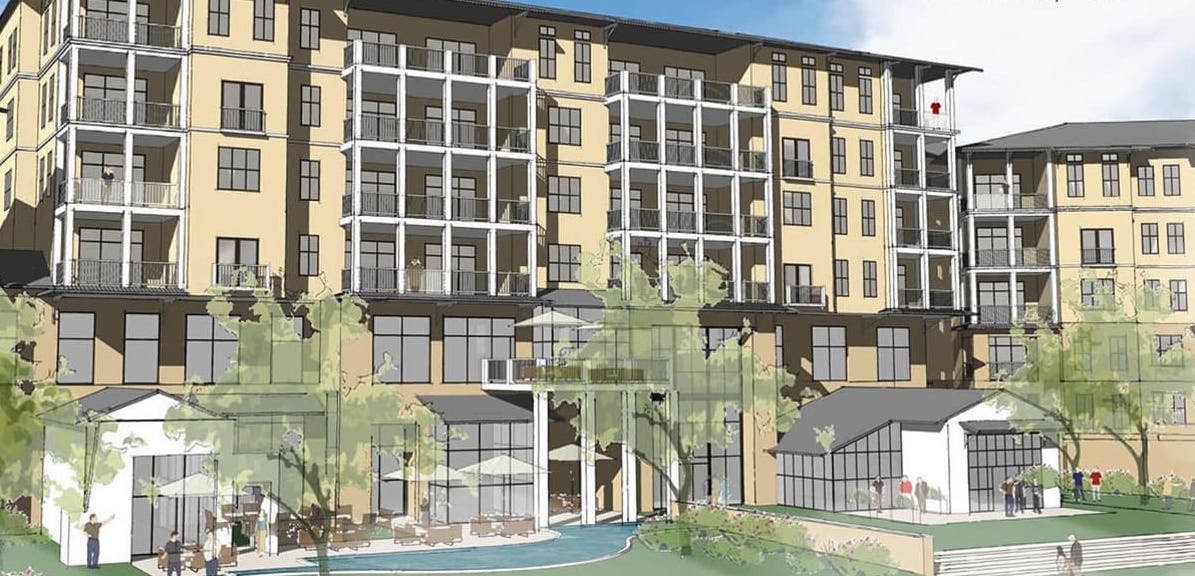
Residential real estate, particularly multifamily apartment communities, represents the most resilient sector for capital preservation. Housing is a non-discretionary human necessity. During economic contractions, consumers may reduce retail spending or downsize office footprints, but the demand for baseline shelter remains constant. This inelastic demand ensures stable occupancy levels and predictable cash flow throughout macroeconomic cycles.
Industrial and Logistics Infrastructure
The growth of digital commerce and global supply chains has elevated industrial real estate into a premier institutional asset class. Distribution centers, fulfillment hubs, and cold-storage facilities are secured by long-term triple-net leases with institutional tenants. These agreements require the tenant to cover property taxes, insurance, and maintenance costs, insulating the investor from rising operational expenses.
Premier Commercial Real Estate
Investing in high-quality commercial assets, such as Class A medical office buildings or retail centers anchored by national grocery brands, offers significant stability. These assets benefit from credit-worthy corporate tenants who sign extended leases, often spanning ten to fifteen years, providing insulation from near-term economic shifts.
Frequently Asked Questions
How does rising interest rate policy affect real estate wealth preservation strategies?
Rising interest rates increase borrowing costs, which can temporarily put downward pressure on property prices by reducing purchasing power. However, from a wealth preservation perspective, long-term investors utilizing fixed-rate debt are largely insulated. Furthermore, periods of high interest rates often coincide with inflation, allowing landlords to raise rents and offset valuation shifts over time.
What is the distinction between direct property ownership and Real Estate Investment Trusts?
Direct ownership gives an investor full operational control, direct tax advantages like depreciation deductions, and insulation from public market volatility. Real Estate Investment Trusts provide liquidity, professional management, and low investment minimums, but they trade on public exchanges, meaning they correlate more closely with public stock market fluctuations.
How do triple-net leases function to protect an investor’s capital?
A triple-net lease is a contractual agreement where the tenant assumes financial responsibility for the three primary property expenses: real estate taxes, building insurance, and structural maintenance. This structure removes operational cost volatility from the landlord, ensuring that the rental income received is predictable and unaffected by sudden increases in municipal taxes or material costs.
What constitutes a high-quality property for long-term wealth preservation?
For preservation purposes, a high-quality property features strong structural integrity, a history of stable occupancy, and placement in a economically diverse market with growing population dynamics. It should also possess favorable zoning attributes and high barrier-to-entry constraints that prevent competitors from oversupplying the immediate submarket.
How should an investor balance property illiquidity within a broader estate?
Illiquidity is a protective trait against market panic, but an estate requires liquid reserves to handle sudden liabilities or tax obligations. Wealth preservation models generally recommend allocating a calculated portion of capital to real estate for stability, while maintaining sufficient liquid cash reserves or short-term equities to manage immediate operational requirements.
Why is the concept of replacement cost critical when evaluating wealth preservation properties?
Replacement cost measures the total expenditure required to construct an identical building on the same plot of land today. If a property can be purchased near or below its replacement cost, it provides a substantial margin of safety. Competitors cannot easily build newer structures to compete on price because their construction costs would dictate significantly higher rental thresholds.